What Is Radon?
Radon is a naturally occurring radioactive gas produced by the breakdown of uranium in soil, rock, and water. It seeps into homes through cracks in foundations, construction joints, gaps around pipes, and even well water. Once inside, it can build up to dangerous levels.
Elevated radon levels can be present in any type of home — old, new, with a basement, without a basement, crawlspace, or slab-on-grade. Because changes occur in our homes and environment, it is recommended to test your home for radon every five years.
Radon is the leading cause of lung cancer deaths in the U.S. for non-smokers and the second leading cause for smokers. The risk of lung cancer from radon exposure is 10–20% greater for smokers than for non-smokers. The EPA estimates that radon causes approximately 21,000 lung cancer deaths each year in the U.S.
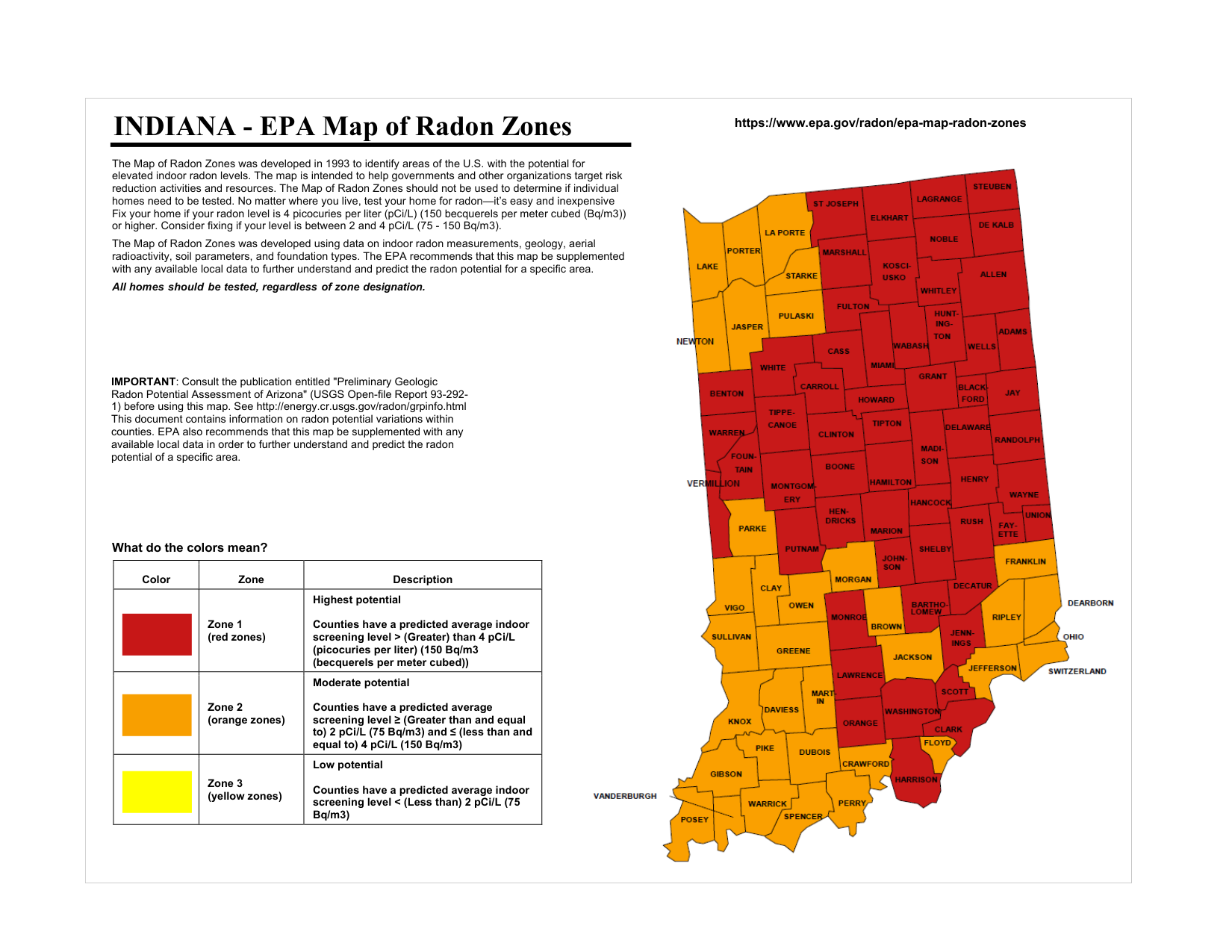
Radon in Indiana
Nearly 1 out of every 3 homes in Indiana is estimated to have radon levels greater than 4.0 pCi/L. Testing is inexpensive and easy — the only way to be sure is to test your home.
Source: Indiana State Department of Health, Lead & Healthy Homes Division
Want to know the radon risk in your area? Enter your zip code on the Ecosense Radon Map to see average levels and risk ratings based on CDC and state health department data.
Why Testing Matters
Testing is the only way to know your home's radon level. You can't see it, smell it, or taste it — and symptoms of radon exposure don't appear until years of damage have already been done.
In Indiana, the U.S. Environmental Protection Agency and the Indiana Department of Health recommend retesting your home every 2 to 5 years, even if your previous results were low. Because nearly one in three Indiana homes is estimated to have elevated radon levels, periodic testing is essential. Testing frequency depends on your home's setup:
Standard Schedule: Every 2 to 5 years to account for changes in soil composition, house settling, or changing weather patterns.
After Renovations: Retest immediately after major structural changes, foundation repairs, or alterations to your HVAC or ventilation system.
If You Have a Mitigation System: If your home already has an active radon mitigation system, you should test at least every two years to ensure the fan and system are running effectively.
The Good News
Radon problems are fixable. Reduction systems can lower radon levels by up to 99%, and new homes can be built with radon-resistant features. The cost is manageable and the health benefit is significant.
Radon Resources
Learn more from these EPA and state publications:
Indiana EPA Radon Zone Map A Citizen's Guide to Radon (EPA) Home Buyer's & Seller's Guide to Radon (EPA) Consumer's Guide to Radon Reduction (EPA)